How to trade meme coin in 2026 with a live pro-style scalping framework
Need articles like this for your video? They help promote it on YouTube and Google — order them in the Telegram bot @sat_sit_bot. Articles with your video embedded are written and posted by the bot itself — on popular topical sites (no ads). Free trial — 50 articles.
· based on the channel insentos
Key takeaways
- Memecoin trading is short-horizon speculation on tokens with no cash flow — the edge comes from process, not from picking a "winner".
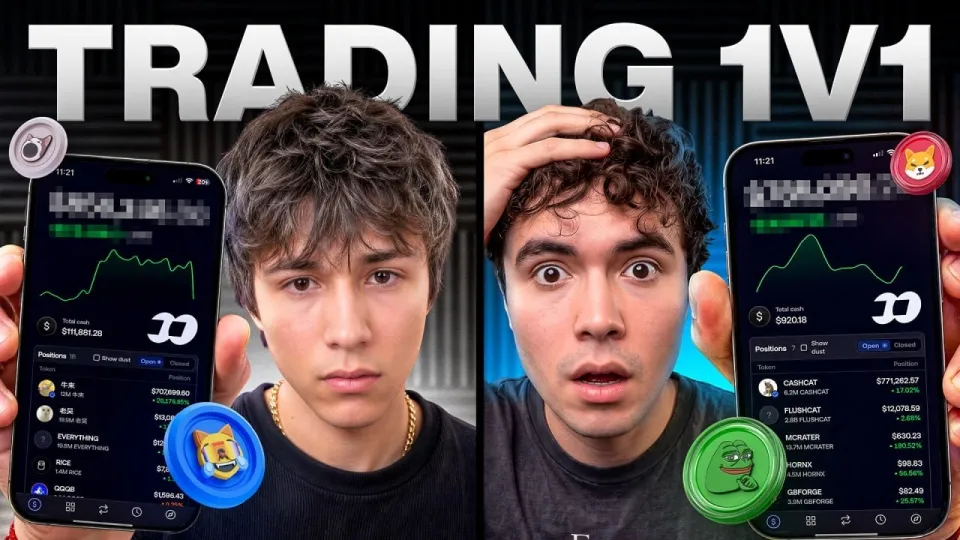
- The insentos challenge format (a pro trader trading live next to a host, with advice given in real time) shows how decisions are made under pressure, not just the results.
- Tools named in the video description are Axiom (axiom.trade) for execution and FOMO (fomo.family) for community and rewards.
- Most meme coin losses come from position sizing, chasing green candles and exiting without a plan — the recurring theme in viewer comments.
- Solana remains the default chain for meme coin scalping because of low fees and fast confirmation, which makes small-size, high-frequency trades viable.
Meme coin trading is the practice of speculating on short-lived, community-driven tokens — usually on Solana — where price is set by attention and liquidity rather than earnings, and the only durable edge is a repeatable process for entries, exits and position size. The insentos video "I Challenged A Pro Memecoin Trader (Who Won?)" is a useful case study because it shows two traders working the same market live, narrating their thinking while the trade is still open. If you want to follow along with the same tooling the channel uses, the FOMO registration link is the entry point referenced in the video description.
What the live pro-vs-amateur format actually teaches about meme coin trading
The value of watching a challenge format is that it exposes the decision layer of meme coin trading rather than the outcome. In the insentos session a professional trader works through positions while explaining the reasoning in real time — a viewer noted that even mid-trade the guest kept asking the host about his thought process, which is exactly the habit that separates a process-driven trader from someone clicking buttons.
Three things tend to show up in sessions like this:
- Pre-trade framing. Before buying, the trader states what would make the trade wrong — a liquidity pull, a failed reclaim of a key level, a dev wallet moving supply.
- Size before conviction. Position size is set by how much can be lost, not by how good the chart looks. Meme coin scalping is a game of surviving many small decisions.
- Narrated exits. Taking profit in tranches and cutting the rest on a defined invalidation is discussed out loud, which is the part beginners rarely see on edited videos.
A second viewer observation is worth repeating: the host is himself an experienced meme coin trader, so the "challenge" is closer to two professionals comparing notes than a beginner being taught from zero. That is a feature, not a bug — you learn more from two people disagreeing about a chart than from one person explaining the basics.
Solana memecoins and the execution stack: Axiom, FOMO and what each is for
Execution speed and tooling decide whether a meme coin strategy is even testable, and the video description points to two specific products. Axiom (https://axiom.trade/) is the trading terminal referenced in the tags and links — a trading interface built for fast on-chain execution, charting and wallet tracking on Solana-style markets. FOMO (https://fomo.family/r/insentos) is the community and rewards layer the channel promotes, where the referral link grants access to the group and its perks.
A practical setup for a beginner looks like this:
- A dedicated hot wallet funded with an amount you are willing to lose entirely. Never the wallet holding long-term assets.
- A terminal that shows liquidity, holder distribution and recent buyer/seller flow before you click buy.
- A habit of checking the contract and the top holders on every token, every time, even when the chart looks obvious.
- A fixed maximum per trade, expressed as a percentage of the trading wallet — commonly 1–5% for learning, not 50%.
Slippage and fees are not trivia on Solana meme coins: on thin pools, a few percent of slippage plus priority fees can turn a small winning trade into a loser. Size the trade so that the round trip cost is a rounding error relative to the expected move.
A repeatable scalping framework for meme coin trading
Meme coin scalping works best when it is boring: the same checklist, the same exit rules, the same size, repeated dozens of times. The framework below is the one that recurs across live trading sessions and beginner-friendly breakdowns.
- Filter first. Skip tokens with concentrated top-10 holders, unlocked dev supply, or liquidity so thin that your own order moves price by double digits.
- Define the setup. Typical setups are a first pullback after launch, a reclaim of a previous high after a flush, or a consolidation breakout with rising volume. If you cannot name the setup, you do not have a trade.
- Set invalidation before entry. A price level or a time limit — whichever comes first. Meme coins decay faster than charts suggest, so a time stop matters as much as a price stop.
- Scale out. Sell a portion into the first push, move the stop to breakeven, and let a runner go only with house money.
- Log the trade. Setup, size, entry, exit, and one sentence on why. Twenty logged trades teach more than two hundred unlogged ones.
What this framework deliberately does not include is prediction. Nobody, including the professional in the insentos challenge, knows whether a specific token will be alive in a week. The edge is in the ratio of average win to average loss and in not blowing up on a single position.
Why most beginners lose money on meme coins
The recurring pattern in viewer reactions to challenge videos is telling: audiences notice that these sessions often end in losses, and conclude that meme coin trading is closer to gambling than to a skill. The honest answer is that it is both — the market is genuinely random in the short term, but the way you size and exit is not.
Common failure modes:
- Chasing. Buying after a 300% candle because the timeline is loud, which means entering exactly where early buyers are exiting.
- No exit plan. Holding a scalping position as if it were an investment, then watching it round-trip to zero.
- Oversizing. One oversized trade erases twenty disciplined ones; this is the single most common cause of blown accounts.
- Copying calls without context. Someone else's entry price, size and time horizon are not yours. A call without a plan is a lottery ticket.
- Ignoring the influencer factor. A viewer pointed out that trading from an account with reach is easier than trading anonymously, because attention itself moves price. Treat public calls as marketing, not as a signal.
Risk management rules that survive a bad week
Risk management is the only part of meme coin trading that compounds reliably, and it is entirely within your control. A workable rule set for a retail trader in 2026:
- Cap total exposure across all open meme coin positions at a fixed share of the trading wallet, for example 20–30%.
- Risk no more than 1–2% of the trading wallet per trade, measured to the invalidation level, not to zero.
- Stop trading for the day after two consecutive losses or a set drawdown — tilt is the most expensive emotion in this market.
- Withdraw profits periodically to a separate wallet. Money that stays in the trading wallet tends to get recycled into the next bad idea.
- Keep a stablecoin buffer so you are never forced to sell a good position to fund a new one.
These numbers are starting points, not gospel. What matters is that they are written down before the session starts and not renegotiated in the middle of a candle.
Common questions new meme coin traders ask
New traders arriving from videos like the insentos challenge tend to ask the same handful of things, and the answers are less exciting than the questions. Is a course necessary? Not at first — a checklist, a small bankroll and a trade log cover the basics, and paid communities are worth it only once you can articulate what you are missing. How much capital do you need? Enough that a full loss does not change your life, because early on you should expect to lose. Which chain? Solana dominates meme coin volume for reasons of cost and speed, but the same rules apply anywhere liquidity is deep enough to exit.
The most useful mindset shift is treating every meme coin trade as a paid lesson with a capped tuition fee. Once the loss is capped in advance, the emotional noise drops and the decisions get clearer — which is precisely what a live pro session demonstrates better than any edited tutorial.
Useful links
- FOMO registration and community access: https://fomo.family/r/insentos
- Axiom trading terminal: https://axiom.trade/
- insentos on X: https://x.com/insentos
- insentos on Instagram: https://www.instagram.com/insentos
- insentos on TikTok: https://www.tiktok.com/@insentos
The takeaway from watching a pro trade meme coins live
Watching a professional work a meme coin chart in real time is more useful than any list of "next 100x" tokens, because it shows the unglamorous parts: sizing, hesitation, cutting a loser, and explaining the reasoning while the position is still open. The insentos challenge format — two experienced traders comparing process rather than promising returns — is a genuinely good model for learning, and the channel is worth following for more of these sessions. Treat everything you see as a demonstration of method, not as financial advice, and never deploy capital you cannot afford to lose entirely. If you want to start with the same community and tooling referenced in the video, begin with the FOMO sign-up link and paper-trade the framework for a week before risking real money.
Questions & answers
Is meme coin trading gambling or a skill?
It is a mix. Short-term price action in meme coins is close to random, but position sizing, exit discipline and trade selection are skill-based and repeatable. Traders who survive treat each trade as a capped-risk bet rather than a prediction.
How much money do I need to start trading meme coins?
Only an amount you can lose entirely without affecting your finances, kept in a separate hot wallet from your long-term holdings. Beginners typically risk 1–2% of that trading wallet per position while learning the mechanics.
Do I need paid tools like Axiom or a community like FOMO to trade meme coins?
Not strictly, but a terminal that shows liquidity, holders and flow saves you from obvious traps, and a community shortens the learning curve. The video description links both Axiom and a FOMO referral, so you can evaluate them yourself before paying for anything.
Why do live meme coin trading challenges so often end in a loss?
Because the market is fast, noisy and mostly zero-sum, and even experienced traders take losses on individual sessions. The lesson is in how the loss is contained — small size, defined invalidation, no revenge trading — not in whether the session finished green.
Source: I Challenged A Pro Memecoin Trader (Who Won?) · Markdown version